Amulet for the Kitchen
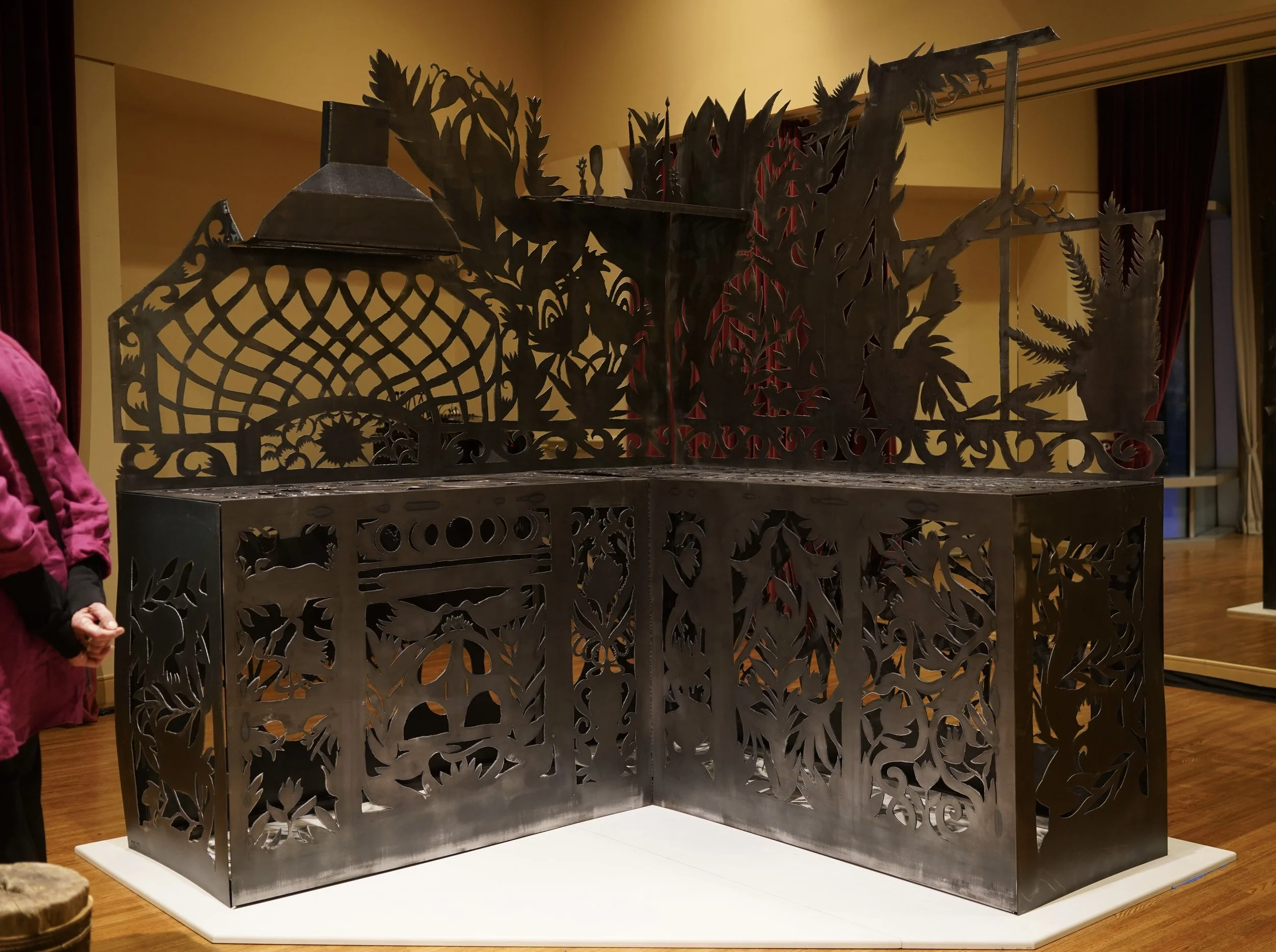
6’ x ‘6 × 7’ 2026, Steel.
Also titled
Amulet Far Der Kikh (Brisket’s in the oven)
Historically, Jews have used the art of papercutting to make protective amulets for life challenges and transitions, to celebrate holidays and rites of passage, to adorn ketubot (marriage contracts), to create Mizrahs which are placed on the east wall of a home to direct prayer toward the holy temple of Jerusalem, for Shivitis or meditative prayer aids, and for yahrzeit memorial tributes. I wanted to make a papercut that directs prayer, or focus, toward the kitchen. I see the kitchen as a sacred site of Judaism and the (mostly) women who cook in Jewish kitchens as holy keepers/creators/disseminators of Jewish culture. Mizrah literally means “East” and also the letters make up the acronym Mem, Zayin, Resh, Chet standing for “Metzad Zeh Ruach Chaim” or "From this side is the source of life.” I was fascinated by the directionality, the orientation of that. I wondered, what would it look like to make a Mizrah for the kitchen, for the home, for hereness? If we turn our prayer towards our families and communities, might we recognize that the source of life is already within our own ovens and mixing bowls, rather than in a far away place?
The act of feeding our families is sacred. There is a fundraiser associated with this sculpture for World Central Kitchen, an org that provides food to people living in humanitarian crises. I invite anyone who feels connected to the sacredness of the kitchen to donate to: donate.wck.org/AmuletfortheKitchen
This piece was created for the 70 Seeds exhibition at Boston Center for the Arts, Curated by Aimee Rubensteen and produced by Becca Leviss’ Judeofuturism Project.
The exhibition was highlighted by Laura Conrad Mandel for JewishBoston.com, who said of this work:
“With a towering presence, Isabel Mattia’s piece “Amulet far der kikh” (“Brisket’s in the oven”) drew me in immediately because of my love of paper-cutting. A life-size kitchen stove and counter made of welded steel, inspired by the most delicate paper cuts, bring the literal weight to the show. The piece celebrates the kitchen as a central part of tradition across generations, with a playful rat, cow, Shabbat candles, and other fun hidden cutouts that illustrate the centrality of the kitchen, food, and family in Jewish life.”